|
|
The Saint's Blog devoted to news and rumors about The Saint and Leslie Charteris. Simon Templar, alias The Saint, was played by Roger Moore in the 1960's TV show featuring the Volvo 1800.
Please e-mail any current news and rumors about The Saint to: 
Saturday, August 17, 2013
The Saint is Back in Print
After many, many years, a very large publishing of The Saint series has been started up by Mulholland in the U.K, an imprint of long-time Charteris publisher, Hodder & Stoughton. This is a really big deal, as a large publishing run of The Saint hasn't happened since the 1980s.
Mulholland will be publishing 35 of the Saint books by Leslie Charteris over the course of a year. As a Hodder imprint, Mulholland will start with the second book in the series, The Saint Closes The Case. They will skip the first title, The Saint Meets The Tiger, as that is a book in which Hodder has never had the publishing rights. The printing series will end with The Saint in the Sun, which is really the last of the true Charteris-only stories. These 35 encompass the classic Saint Saga, in the truest sense, and skip the last few titles that were co-authored with help from people besides Leslie Charteris himself. Of course, the last few are also the hardest ones to find, as they have been published much less than the heart of the collection. Let's hope that they sell enough of these to publish the remaining titles for a really complete run of the Saint in full!
Publishing started earlier this year, and plans to date are to be finished in February of 2014. The titles are being published in both print and ebook formats with new introductions and extra content for each edition. The Publishing Schedule looks like this:

28 FEBRUARY 2013
25 APRIL 2013

20 JUNE 2013
29 AUGUST 2013
19 DECEMBER 2013 (was 24 OCTOBER 2013)

30 JANUARY 2014 (was 19 DECEMBER 2013)
27 FEBRUARY 2014
- The Saint Around the World, ISBN: 9781444766462 paperback / 9781444766479 e-book
- Thanks to the Saint, ISBN: 9781444766493 paperback / 9781444766486 e-book
- Señor Saint, ISBN: 9781444766509 paperback / 9781444766516 e-book
- The Saint to the Rescue, ISBN: 9781444766523 paperback / 9781444766530 e-book
- Trust the Saint, ISBN: 9781444766547 paperback / 9781444766554 e-book
- The Saint in the Sun, ISBN: 9781444766561 paperback / 9781444766578 e-book
Labels: 2013, Hodder and Stoughton, Leslie Charteris, Mulholland
7 comments
for The Saint is Back in Print  
Tuesday, December 11, 2012
Adam Rayner is The Saint on TV in 2013
Last Friday, the news broke on the latest television incarnation of Leslie Charteris' famous sleuth, Simon Templar, alias The Saint. There have been many rumors about a new show since the 1997 Val Kilmer movie, with such stars as James Purefoy and Dougray Scott attached to them. After years of perseverance, it appears that the efforts have finally paid off and a new TV show of The Saint will start filming in January 2013.
Therefore with much fanfare and trumpeting, it's time to meet the new Saint!
Adam Rayner as Simon Templar, alias The Saint
 Adam is English, just as most people expect Simon Templar to be. The Saint has always been English at the heart, with a well-travelled cosmopolitan history that blends him into a true man of the world. Adam is English, just as most people expect Simon Templar to be. The Saint has always been English at the heart, with a well-travelled cosmopolitan history that blends him into a true man of the world.
Adam Rayner most recently starred as the lead role in the TV series, Hunted, and is also known for his work on Doctor Who, Making Waves, and Hawthorne.
He has a wealth of TV shows and movies to watch, as Leslie Charteris first authored the Saint in 1928, and it has been in constant rotation ever since.
Eliza Dushku as Patricia Holm
 Playing Simon Templar's on-again-off-again love interest and partner in crime, Dushku's role of Patricia Holm will hopefully recapture some of the years of history between the two. Playing Simon Templar's on-again-off-again love interest and partner in crime, Dushku's role of Patricia Holm will hopefully recapture some of the years of history between the two.
The show Burn Notice seems to have borrowed heavily from this classic interaction, and it works!
Eliza Patricia Dushku is probably most famous for her appearances on the TV show, Buffy the Vampire Slayer, and she did play the role of the teenage daughter in the classic spy thriller, True Lies.
Production Team:
- Roger Moore, co-Producer, the original Simon Templar of the 1960s
- Geoffrey Moore, co-Producer
- Lulu Moore, co-Producer
- Louisa Macdonald, co-Producer
- Simon West, Director
- Jesse Alexander, Screenwriter & Executive Producer, best known for his work on Lost
- Brad Krevoy, Executive Producer, MPCA Production Company
- Roman Viaris, Executive Producer
- Fred Fuchs, Production
- Silverscreen Pictures
- Mandy Sherman, Casting, Sherman/Knight
- Sari Knight, Casting, Sherman/Knight
- Michael MacDermott, Product Placement
- Francisco J. González, International Sales
- Ian Dickerson, Creative Consultant
No network are attached to this project as of yet. The plan is to shoot the pilot and shop it around.
Production is slated to kick-off this Friday, December 14 in Los Angeles, London and Toronto. Filming to be scheduled in 2013 in Los Angeles and San Diego, with other locations to follow as the series progresses.
Labels: #TheSaint, 2012, Adam Rayner, Dougray Scott, Eliza Dushku, Geoffrey Moore, Ian Dickerson, James Purefoy, Leslie Charteris, Roger Moore, TV
16 comments
for Adam Rayner is The Saint on TV in 2013
Thursday, April 19, 2012
Moonstone Graphic Novel of The Saint Coming July 2012
 As first reported in our 2010 Moonstone Saint announcement, we have been waiting a long time for the latest version of The Saint in comic book form. The wait is almost over! The first issue of the upcoming graphic novel, The Saint, will be published by Moonstone books in July 2012. The story is written by Leslie Charteris and Mel Odom, with original illustrated artwork by Eduardo Barreto. As first reported in our 2010 Moonstone Saint announcement, we have been waiting a long time for the latest version of The Saint in comic book form. The wait is almost over! The first issue of the upcoming graphic novel, The Saint, will be published by Moonstone books in July 2012. The story is written by Leslie Charteris and Mel Odom, with original illustrated artwork by Eduardo Barreto.
The comic format will be 16 color pages, and will be priced at $1.99 There will be two different covers, with 80% being the standard, and the other 20% a unique purple cover with a smoke trail of the Saint's stickman logo.
The first new SAINT comic book in America in over 60 years!
Soon to be a major television show!
The Robin Hood of modern crime returns!
 He robs from the evil and heartless rich, and gives to the wronged and deserving poor–in the process, keeping a percentage for his own expenses. He doesn’t work for the law, the government, or anyone else. He is a lone wolf…an adventurer, a detective, a rogue, but always…a gentleman! He robs from the evil and heartless rich, and gives to the wronged and deserving poor–in the process, keeping a percentage for his own expenses. He doesn’t work for the law, the government, or anyone else. He is a lone wolf…an adventurer, a detective, a rogue, but always…a gentleman!
In “The Sizzling Saboteur” – The Saint travels to Texas in pursuit of a man who has been sabotaging weapons factories, but when his quarry turns up burned to crisp, he has to contend with both the local police, a trio of mysterious men behind the sabotage, and a beautiful Russian.
The adventures of Simon templar have been documented in The Saint books by Leslie Charteris,The Saint movies and films, old-time radio shows, comic strips, and The Saint and The Return of The Saint television series.Labels: 2012, Comics, Leslie Charteris, Moonstone
4 comments
for Moonstone Graphic Novel of The Saint Coming July 2012
Friday, December 17, 2010
Leslie Charteris' brother Roy Henry (Bowyer) Yin, who recently celebrated his 100th birthday on October 7th, passed away at the age of 100 in Singapore this past Tuesday, December 14th.
Both Leslie and Roy were born in Singapore, with elder brother Leslie appearing in 1907 with Roy following in 1910. Roy went to King's College as an Maths undergraduate in 1929, then switched to History and graduated in 1932. Roy developed a passion for the music of the church, and formed lifelong friendships with the Dean of Chapel, Eric Milner-White and the distinguished choirmaster, Director of Music Boris Ord.
in 1934, at the early age of 23, Rev. Yin became the Chaplain (Deacon) at King's College where he served until 1937, and then went on to Hurstpierpoint College in Sussex, where he was Chaplain from 1937 to 1945. In 1946 he became Chaplain and Master of the Choir at St Thomas' College in Mount Lavinia, Sri Lanka, where he stayed until 1962.
He was a vicar at St Hilda's Church in Katong, and finally capped-off his illustrious career as a resident priest at St Andrew's Cathedral -- where his services were always popular with parishioners.
Roy Henry Bowyer-Yin was well-loved, and active in the church until his 90s. He died of old age on Tuesday at his home on the East Coast of Singapore at the age of 100.Labels: 2010, King's College, Leslie Charteris, Roy Henry Bowyer Yin, Singapore
1 comments
for Roy Henry Bowyer-Yin (1910-2010)
Tuesday, June 08, 2010
Last weekend, Ian Dickerson was interviewed on The Tainted Archive's TV Cop Weekend about his forthcoming book, The Saint on TV.
We're very excited about this forthcoming book coming from Hirst Books in October 2010 (preorder today!), as Ian has had unprecedented access to Leslie Charteris, family, and friends over his many years at the Honorable Secretary of the Saint Club. The interview gives a brief glimpse into the behind-the-scenes stories that Ian has managed to unearth during his years of in-depth research and own Saintly detective work. These stories include the Hollywood years of the 1940s and 50s when The Saint first became a topic of discussion with TV producers, the fantastic Roger Moore series of the 1960s, the Return of The Saint with Ian Ogilvy in the 1970s, the 1980s efforts, and the latest attempts to revive The Saint to television audiences around the world, The Saint on TV is coming soon, and hopefully not just in book form!
The Saint on TV by Ian Dickerson  The path to TV Heaven for the Saint and Leslie Charteris started in 1952, but the signposts to it had been planted in the 1940s: Vincent Price, during his spell as the Saint on the radio, had observed that the Saint’s creator Leslie Charteris “wanted to play it in every media” and in late 1948 Charteris had been approached by an Argentine company wishing to produce a series of Spanish-language Saint shorts—that is to say a series of films lasting twenty-five minutes, not an item of Saintly apparel. He refused them point blank. Even in the media intensive 21st Century Argentinean film and television productions are not know for the international sales and recognition that Charteris felt his creation deserved.
It wasn’t until 1952, with the American TV industry still very much wearing its nappies, that Charteris began to seriously study ways to put the Saint on television; the blossoming small screen industry seemed the perfect next step for the adventures of Leslie Charteris, as creator of the Robin Hood of Modern Crime.
Earlier that year he’d renegotiated the contract for the Saint radio shows retrieving control of the TV rights, which had previously been bundled alongside the radio rights as TV hadn’t really kicked into gear. He was now determined to develop a TV show for the Saint and penned a number of scripts, designed to show how a half-hour Saint TV show would run.
He set to work with an LA based producer packaging the scripts and offering them as “a series or program of motion pictures for use exclusively on television and radio” targeting David Niven for the lead. It never made it in to production and with the benefit of hindsight it can be suggested that no one was willing to risk engaging Charteris, who had absolutely no experience in producing or directing a TV show.
Some verification of this theory was offered over a year later when Ted Ashley, of the Ashley-Famous Agency had tried to sell the Saint on TV. He summarized the problems they were encountering;
I regret having to advise you that the general opinion has been that the scripts are not sufficiently interesting and particularly, not of the proper type, in terms of general content for a motion picture television film.
...we have indicated that you would write scripts or have them written under your supervision...
...there are many indications that a pilot film and possibly a commitment assuring the production of a minimum of 13 pictures can be obtained, if you would be willing to limit your relationship to that of general advisor on scripts, casting, direction and production...
By 1960 the Saint was still to conquer television. Continue reading at The Tainted Archive...Labels: 2010, Ian Dickerson, Leslie Charteris, TV, Vincent Price
3 comments
for Ian Dickerson Discusses The Saint on TV
Wednesday, May 12, 2010
Happy birthday to Leslie Charteris today. He was born on May 12, 1907 so therefore would have been 103 this year! Cheers, and I'm sure we'll all be reading a Saint story tonight in his memory.Labels: 2010, Leslie Charteris
2 comments
for Happy Birthday to Leslie Charteris
Wednesday, December 10, 2008
The Best of The Saint by Leslie Charteris is now available for order from Amazon! This two-volume tome will be released on December 11, 2008.
It's been 80 years since the adventures of Simon Templar first debuted in print and Hodder & Stoughton are celebrating this anniversary by publishing two anthologies of the best of the Saint's adventures.
Volume 1 is introduced by Ken Follett; this sparkling collection of the very best of the earlier stories:- The Man Who Was Clever
- The Policeman with Wings
- The Lawless Lady
- The Inland Revenue
- The Charitable Countess
- The Star Producers
- The Art of Alibi
- The Simon Templar Foundation
- The High Fence
- The Ellusive Ellshaw
- The Miracle Tea Party
- The Affair of Hogsbotham
| | |
Sir Roger Moore, star of the Sixties TV series, introduces Volume 2 -- a collection of post-war stories of the following Saint adventures:- The Covetous Headsman
- The Angel's Eye
- The Rhine Maiden
- The Golden Journey
- The Loaded Tourist
- The Spanish Cow
- The Latin Touch
- The Patient Playboy
- The Talented Husband
- The Reluctant Nudist
- The Lovelorn Sheik
- The Pluperfect Lady
- The Sporting Chance
- The Better Mousetrap
- The Prodigal Miser
- The Hopeless Heiress
|
| |
Labels: 2008, Amazon.com, Hodder and Stoughton, Ken Follett, Leslie Charteris, Roger Moore
13 comments
for The Best of The Saint by Leslie Charteris
Monday, May 12, 2008
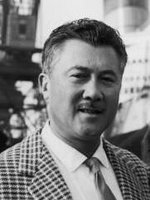 Today, May 12th, would have been Leslie Charteris' 101st birthday. Charteris was born in Singapore on May 12, 1907 as Leslie Charles Bowyer Yin. Today, May 12th, would have been Leslie Charteris' 101st birthday. Charteris was born in Singapore on May 12, 1907 as Leslie Charles Bowyer Yin.
Charteris was born to a Chinese father and an English mother. His father was a physician who claimed to be able to trace his lineage back to the emperors of the Shang Dynasty. Charteris became interested in writing at an early age, at one point creating his own magazine with articles, short stories, poetry, editorials, serials, and even a comic strip.
2008 is shaping up to be a great year for Leslie Charteris. Eighty years ago Charteris wrote and published the first of many stories about Simon Templar, alias The Saint. The Saint has appeared in various media, and it seems that this 80th anniversary of his creation is the one that people are latching on to -- rather than last year's centenary of the author, which pretty much everyone missed anyway.
The 80th anniversay plans include a new 2-hour TV pilot starring James Purefoy, re-releases of Charteris' books, some new audio CDs, and additional DVD releases around the world.
Watch this space. As things are confirmed, you'll learn more about them by checking the news blog on www.saint.org and www.lesliecharteris.com!Labels: 2008, Leslie Charteris
0 comments
for Happy 101st Birthday Leslie Charteris
Saturday, January 12, 2008
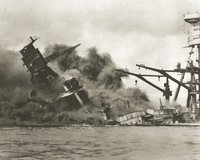 The Saint’s Second Front is the name of a lost, unpublished short story that Leslie Charteris wrote in the summer of 1941. While the title for this story is unconfirmed, a novella called The Saint’s Second Front is referred to in some correspondence between Leslie Charteris and his agents Willis Wing and Virginia Russell around this time. Since The Saint’s Second Front is otherwise unknown, and it makes sense from a plot perspective, this name is probably correct. The Saint’s Second Front is the name of a lost, unpublished short story that Leslie Charteris wrote in the summer of 1941. While the title for this story is unconfirmed, a novella called The Saint’s Second Front is referred to in some correspondence between Leslie Charteris and his agents Willis Wing and Virginia Russell around this time. Since The Saint’s Second Front is otherwise unknown, and it makes sense from a plot perspective, this name is probably correct.
This lost story is often referred to as The Saint at Pearl Harbor, but that is not an accurate title. Other suggestions have been The Saint and The Surprise Attack, Surprise The Saint, or even just Surprise Attack!
Many of the Saint stories written by Leslie Charteris have been proven to be quite prophetic of things to come. None as much so as one particular story that was never published at all.
It is fairly certain that it was Cosmopolitan who turned this story down for reasons of, "we do not think this is the time to publish anything which might aggravate the tensions with our Japanese friends.”
In the introduction of the May 1957 issue of The Saint Detective Magazine, Charteris wrote:A while after that I tried to get ahead of the game by writing Prelude For War when Hitler was still only a rather funny little man making raucous noises that scared relatively few people. Being obviously incurable, after that war was solidly started, I wrote a book in which the Saint averted a fair facsimile of Pearl Harbor, except that the attack was to be on California instead of Oahu. That is the only story I have written since becoming a professional which never got published: nobody would touch it, because it was too preposterous, and might even offend our good friends, the Japs. This was in the summer of ‘41. But perhaps I was lucky that time, after all. As a period piece, today, it might have seemed a bit silly. Eight years later in Instead of The Saint—IV, published in the January 1965 issue of The Saint Mystery Magazine, Charteris again mentioned his great unpublished story of 1941:The only story I have failed to sell since I became what is called “established” dealt elaborately and ingeniously with a Japanese plot for a sneak attack on the United States; it was completed in the summer of 1941, and the only error in my crystal ball was that the attack was organized for the coast of Southern California instead of Pearl Harbor, and was planned as part of an immediate invasion, in which I was smarter than the Japanese High Command. It was killed by the national magazine I wrote it for because “we do not think this is the time to publish anything which might aggravate the tensions with our Japanese friends”. And now, of course, unlike other prophetic stories which I first brought out when they were prophetic, there would be no point in publishing it. Unfortunately it looks like the story has been lost forever as Paul M. James writes in a letter to Dan Bodenheimer, December 21, 1990:That “Pearl Harbor” Saint story is a sad one (especially for me). Some years ago, L.C. [Leslie Charteris] told me he did not keep a copy after it was turned down. Then, just recently, Ellen Nehr (who is writing that Crime Club book [History of the Crime Club]) wrote me that all Doubleday records prior to the early 1950s were trashed by some idiots when Doubleday sent its old (before early 1954) records to a warehouse. What a catastrophe! I recently wrote L.C. that I had always hoped to find that Saint “Pearl Harbor” manuscript. But it now looks like it is gone for good. And more than 50 years later, this story is still missing. It is one of the Saint's own enduring mysteries. If anyone knows of a way to track this story down, I'm sure all the Saint fans would be very interested in reading this long-lost and prophetic story about The Saint.Labels: 2008, Cosmopolitan, Leslie Charteris, Pearl Harbor
7 comments
for The Saint's Second Front
Friday, November 30, 2007
 In what appears to be a bazaar copyright and/or trademark infringement, it's been noted that there is an electronic cigarette on the market which features the Saint logo. In what appears to be a bazaar copyright and/or trademark infringement, it's been noted that there is an electronic cigarette on the market which features the Saint logo.
You can visit the SuperSmoker website for time being, that is until the lawyers show up. This is not in anyway an endorsement of this product. It is a surprised, "hey check this weird thing out while you can" notice.
There is also a YouTube video of the product.
Leslie Charteris, the author of The Saint stories, smoked up until the 1950s when he quit completely and even had Simon Templar quit as well! He was quite adamant about not having smoking around him, and would not be happy about this use of his worldwide trademarked Saint Stickman Logo.Labels: 2007, Leslie Charteris, Saint Logo
1 comments
for SuperSmoker Saint Cigarette Trademark Infringement
Monday, September 24, 2007
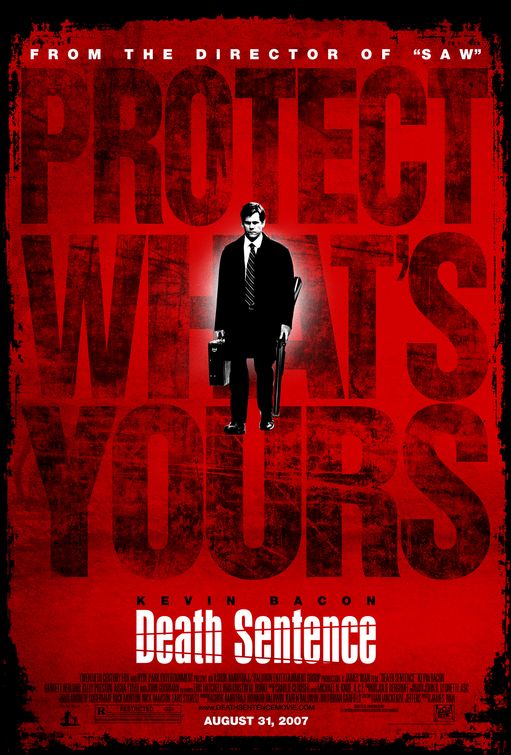
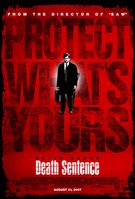 Death Sentence is a 2007 film loosely based on the 1975 novel by Brian Garfield. The film is directed by James Wan, and stars Kevin Bacon as Nick Hume, a man who becomes a vengeful vigilante killer after his son is murdered by a gang as an initiation ritual. The Brian Garfield novel is part of his Death Wish series, made famous by the films with Charles Bronson. Death Sentence is a 2007 film loosely based on the 1975 novel by Brian Garfield. The film is directed by James Wan, and stars Kevin Bacon as Nick Hume, a man who becomes a vengeful vigilante killer after his son is murdered by a gang as an initiation ritual. The Brian Garfield novel is part of his Death Wish series, made famous by the films with Charles Bronson.
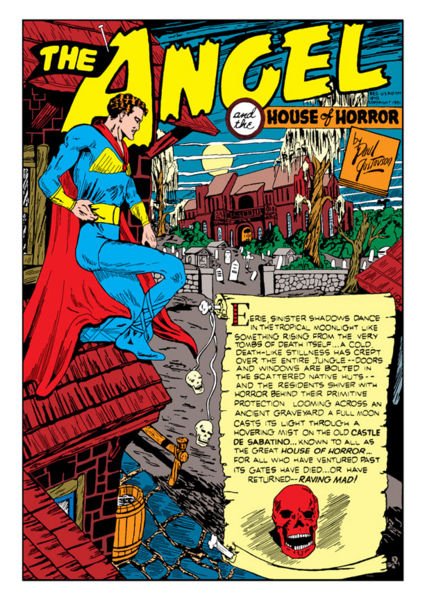
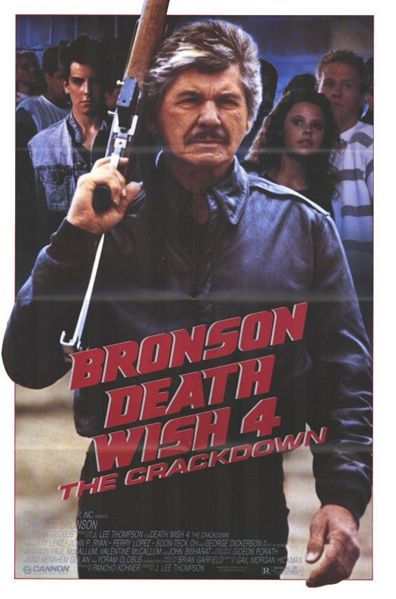
Death Wish IV is one of two blatant knock-offs of Leslie Charteris' The Saint in New York. The other is The Angel, from Timely comics -- according to Maurice Horn in World Encyclopedia of Comics, an early story of this character copied the plot of The Saint in New York and was on whole a homage to Charteris.
John McDonagh wrote to Brian Garfield (author of Death Wish) about the Charteris-Death Wish connection. From: John McDonagh
To: Brian Garfield
Sent: Fri, 13 Jul 2007 11:26 pm
Subject: Bronson's Loose, I enjoyed the book, part IV and Saint in New York
By the way, on Death Wish IV, I actually had the pleasure of meeting with Irwin Keyes, who played a chauffeur to Frank Boggs (the hitman that Kersey defenestrates) in that film. He (Keyes) mentioned that he was almost hit by a dummy when they filmed Boggs' death scene. I told him "trademark Golan and Globus cutting corners".
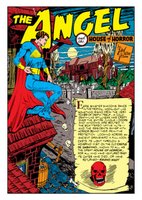 I also informed Keyes that the plot of part IV actually had two major precursors. I can only imagine what the estate of Dashiell Hammett thought and what Leslie Charteris said (who was still alive when part IV came out in 1987; he died in 1993), since it took from Red Harvest by the former (as did Yojimbo and A Fistful of Dollars as Hickman notes) and The Saint in New York from the latter (protagonist brought in to wipe out gangs only to find out he has been working for a mobster out to eliminate his rivals). Red Harvest has been copied quite a few times, but the Saint in New York has been adapted far fewer times (there was a movie version and the Timely Comics character The Angel, already derivative of the Saint, did an ex officio adaptation of The Saint in New York) so it was interesting to see the homage to it in Death Wish IV. I also informed Keyes that the plot of part IV actually had two major precursors. I can only imagine what the estate of Dashiell Hammett thought and what Leslie Charteris said (who was still alive when part IV came out in 1987; he died in 1993), since it took from Red Harvest by the former (as did Yojimbo and A Fistful of Dollars as Hickman notes) and The Saint in New York from the latter (protagonist brought in to wipe out gangs only to find out he has been working for a mobster out to eliminate his rivals). Red Harvest has been copied quite a few times, but the Saint in New York has been adapted far fewer times (there was a movie version and the Timely Comics character The Angel, already derivative of the Saint, did an ex officio adaptation of The Saint in New York) so it was interesting to see the homage to it in Death Wish IV. 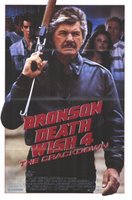 To which Brian Garfield replied that didn't remember much of anything about the plot of Death Wish IV since he didn't write it and wasn't even sure he had ever watched the entire movie. He went on to say that Hammett or Charteris need not worry, that since there are a limited number of plot lines, all writers crib from one another, sometimes inadvertently, and that such duplications have little or no effect on the quality or effect of the work. It's the characters and their relationships that are what separates the great stories from the more mundane, and fortunately so, otherwise King Lear would have long ago been buried under a large pile of imitations. To which Brian Garfield replied that didn't remember much of anything about the plot of Death Wish IV since he didn't write it and wasn't even sure he had ever watched the entire movie. He went on to say that Hammett or Charteris need not worry, that since there are a limited number of plot lines, all writers crib from one another, sometimes inadvertently, and that such duplications have little or no effect on the quality or effect of the work. It's the characters and their relationships that are what separates the great stories from the more mundane, and fortunately so, otherwise King Lear would have long ago been buried under a large pile of imitations.Labels: Brian Garfield, Charles Bronson, Dashiell Hammett, Kevin Bacon, Leslie Charteris
0 comments
for Death Wish 4 the Saint
Thursday, August 30, 2007
 Fiona Glenanne is a fictional character (portrayed by Gabrielle Anwar) in the television series Burn Notice. She was affiliated with the IRA for 14 years, but ran afoul of her old organization because she didn't like being told what to do. She has since gone out on her own, picking up odd jobs and using her skills in explosives, lock picking, tracking, weapons, and hand-to-hand combat to make a living. Fiona picked up Michael Westen in Miami, and has since helped him numerous times in his various jobs. Fiona and Michael had a past relationship, which Michael ended, apparently due to a fear of commitment. Since she has met up with Michael again, Fiona has continued to pressure Michael into a relationship. Fiona Glenanne is a fictional character (portrayed by Gabrielle Anwar) in the television series Burn Notice. She was affiliated with the IRA for 14 years, but ran afoul of her old organization because she didn't like being told what to do. She has since gone out on her own, picking up odd jobs and using her skills in explosives, lock picking, tracking, weapons, and hand-to-hand combat to make a living. Fiona picked up Michael Westen in Miami, and has since helped him numerous times in his various jobs. Fiona and Michael had a past relationship, which Michael ended, apparently due to a fear of commitment. Since she has met up with Michael again, Fiona has continued to pressure Michael into a relationship.
While The Saint's girlfriend, Patricia Holm has a very different background, there is something about the interaction between Fiona Glenanne and Michael Westen that is reminiscent of The Saint's relationship with Pat. It has been written that Leslie Charteris wrote Patricia to portray his ideal of the perfect male/female relationship, and while that aspect isn't quite as apparent, there are similarities:- Both Pat and Fiona are strong women who are equal to the tasks that face their male counterparts.
- Simon Templar and Michael Westen avoid commitment due to job dangers.
- The dialog between the two has affection, humor, and intelligence.
- Both Simon and Michael trust their girlfriends to do even the most dangerous jobs without hesitation.
- Watch the interaction between the two on Burn Notice; it compares favorably to how Simon Templar and Patricia Holm might act together in this current day and age.
All in all, if there is to be a Patricia Holm in the forthcoming TV series of The Saint, it would be great if the dialog was as sharp as the writing on Burn Notice!
Thoughts? Discuss!Labels: 2007, Burn Notice, Fiona Glenanne, Leslie Charteris
2 comments
for Patricia Holm, Meet Fiona Glenanne
Wednesday, August 01, 2007
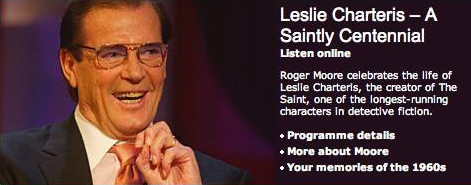
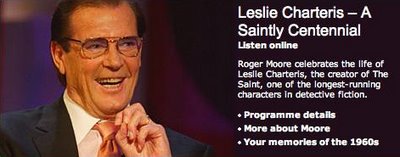
 Roger Moore was highlighted in the main feature area of the UK version of the BBC's home page today. This prime spotlight was in connection with the BBC Radio 4 show that Roger narrates, and is well worth the listen! Roger Moore was highlighted in the main feature area of the UK version of the BBC's home page today. This prime spotlight was in connection with the BBC Radio 4 show that Roger narrates, and is well worth the listen!Leslie Charteris -- A Saintly Centennial
Listen Online
Roger Moore celebrates the life of Leslie Charteris, the creator of The Saint, one of the longest-running characters in detective fiction.
Programme details
More about Moore
Your memories of the 1960s Here's a screenshot of the feature tile:
 Labels: 2007, BBC, Leslie Charteris, Roger Moore
0 comments
for Roger Moore on the BBC Home Page
Tuesday, July 31, 2007
BBC Radio 4 has posted a RealAudio stream of Leslie Charteris: A Saintly Centennial. The link will only be available for seven days:
http://www.bbc.co.uk/radio4/ram/tue1130.ram
You will need to download the latest RealPlayer from Real.com in order to listen to Barbra Paskin's radio tribute to Leslie Charteris as narrated by Roger Moore.Labels: 2007, Barbra Paskin, BBC, Leslie Charteris, Roger Moore
4 comments
for Leslie Charteris: A Saintly Centennial
Monday, July 30, 2007
Don't forget to tune in tomorrow for Barbra Paskin's tribute to 100 years of Leslie Charteris with Roger Moore narrating. The live show is at 11:30am tomorrow, London time, with on-demand replays available for seven days after the initial broadcast.
Leslie Charteris
Tuesday 31 July 2007 11:30-12:00 (Radio 4 FM)Roger Moore, who starred as Simon Templar in the original TV series, celebrates the centenary of the birth of popular fiction writer Leslie Charteris, famous for his adventures featuring the character better known as The Saint. The programme includes rare interview footage of Charteris along with contributions from his family, actor Ian Ogilvy and Charteris biographer Ian Dickerson. There has been some recent issues with BBC Radio 4's RealAudio play back, and during testing today, this is the message that was being displayed:We are experiencing severe technical problems, and regret that many programmes are unavailable. We are working to restore normal service. See station websites for alternative links. We'll keep you posted as to the lastest links and news about this great show.Labels: 2007, Barbra Paskin, BBC, Ian Dickerson, Ian Ogilvy, Leslie Charteris, Roger Moore
0 comments
for BBC Radio Program on Leslie Charteris
Monday, July 16, 2007
Date: 2007/07/16 Mon PM 10:48:51 PDT
From: Ian Dickerson
Subject: It's back...
I wasn’t planning to do it quite this soon but since the radio documentary’s now been scheduled I thought I’d better do something.
Yup, www.lesliecharteris.com is back online. New host—apparently spam protected (but that’s not an invitation!)—and new look. Some new content…I’m sure you’ll all be whizzing over to have a look at the short interview with Jorge Zamacona, the writer of the new Saint pilot.
I still have some work to do—I’ve temporarily killed work on the merchandise page to get the web site back up, and a couple of strange html-like boxes have appeared at the bottom of every page—but I’ll get that sorted in due course.
IanLabels: 2007, Ian Dickerson, Leslie Charteris
1 comments
for LeslieCharteris.com is back online
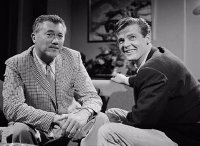 Burl Barer reports a few more details about the upcoming BBC Radio 4 special by Barbra Paskin on the author of The Saint, Leslie Charteris. Burl Barer reports a few more details about the upcoming BBC Radio 4 special by Barbra Paskin on the author of The Saint, Leslie Charteris.
Leslie Charteris – A Saintly Centennial
Tuesday, July 31, 2007
11:30am - 12:00noon BBC Radio 4This year marks the centenary of the birth of popular fiction writer Leslie Charteris, best known for his many books chronicling the adventures of Simon Templar, alias The Saint.
In this special programme, actor and Saint portrayer Roger Moore explores the life and legacy of Charteris and reveals a world of adventure, torment, insecurity, failed marriages and enormous success as a thriller writer.
The adventures of The Saint have appeared continuously since 1928, making Simon Templar the longest-running character in contemporary detective fiction. But there was more to Charteris's literary acuity than The Saint alone. He was fluent in several languages; he had a monthly column in the epicurial delight, Gourmet magazine; and he devised a pictorial sign language which he called "Paleneo" and wrote a book about it. He was also one of the earliest members of Mensa.
Despite his film-star looks, with a hint of exoticism, Charteris suffered from a long-standing insecurity about his appearance, arising from his mixed racial origin. In later years he dated some of Hollywood's most beautiful women, among them Marlene Dietrich and Jean Harlow.
It wasn't until 1963, when Lou Grade cast Roger Moore and filmed the first television series of The Saint, that Charteris at last felt he'd received the final seal of approbation that had eluded him for 30 years.
Among those exploring the world and psyche of Charteris are Dan Bodenheimer, who runs the official Saint website; Burl Barer, author of The History Of The Saint; and Charteris's biographer Ian Dickerson. Labels: 2007, Barbra Paskin, BBC, Burl Barer, Ian Dickerson, Leslie Charteris, Roger Moore
1 comments
for Leslie Charteris - A Saintly Centennial on BBC
Monday, July 09, 2007
When Leslie Charteris lived in the Hollywood area in the mid-1940s, he ran Saint Enterprises, a small publishing house, out of an office on North Robertson Blvd. It was on the North-East corner of N Robertson and W Beverly Blvds, just around the corner from The Mysterious Bookshop of all places! Yahoo Maps has nice view of the area. The exact address was:
Saint Enterprises
314 N Robertson Blvd
West Hollywood, CA 90048-2414
A greatly detailed description of his vast enterprise was written by Leslie Charteris and sent out to a large number of subscribers to his weekly newsletter.
If someone could comment below and tell us all what is there now, that would be wonderful.
From 'A Letter From The Saint', May 16, 1946:This, then, involved an Office; because as everyone knows no business executive can execute properly without an Office. Wherefore we made ourselves heirs to a heavily mortgaged piece of real estate of sufficiently white elephant proportions to carry the gaudy howdah which we felt our new role in life demanded of us. It has been suggested to us that you might be interested in knowing what this environment is really like.
This exotic mausoleum occupies most of a short block on a Hollywood boulevard otherwise distinguished by hand laundries and hamburger stands. It is a one story building, partly because we are selling most of our spare stories, and partly because we cannot afford insurance for all the visitors who might otherwise fall or be helped down the stairs.
At one end of this building is a large barn known as the Shipping Room, which for some unaccountable reason is usually stacked to the ceiling with large quantities of Saint books which we are still waiting for various characters to buy.
Northwards of this is the main entrance, fronted by a spacious and studiously uncomfortable reception room, where writers, entrepreneurs, and general creditors endeavor to struggle past a receptionist whom we have thoughtfully protected with a sheet of bullet-proof glass. Those who are lucky or persistent enough to gain entrance to the interior, would find on their right the studio of Milt Neil, the artist already referred to, who with the help of three or four assistants turns out our book jackets and other illustrations, as well as plenty of other work of his own. This is a very convenient arrangement for us, but results in a considerable loss of man-hours when he is working on pin-up calendars with live models.
Turning your back on this temptation, you might progress to an open section known as the Slave Market, where the most beautiful girls in the world pound typewriters to perpetuate incomparable manuscripts, or adding machines to keep abreast of our incoming debts.
Opening off this Elysian backwater are a number of black doors with enormous brass handles, resembling bank vaults in every respect except the amount of money cached behind them. These portals admit to various offices occupied by the male bees, or drones, in this hive, or dive.
These are mainly paneled in redwood, fluorescently lighted, healthily ventilated, equipped with bookshelves and restful couches, and swept out once a week. In subsequent letters we may tell you more about their occupants. On this first cursory once-over, you may be informed that one of them contains two gentlemen named Cleve Cartmill and Roby Wentz, who are the mainstays of our Editorial Department, while another harbors our office manager and general panjandrum, Mr. Robert Black, whose perpetually worried expression is probably due to a congenital inability to get used to coping with visiting sheriffs.
A third vault is actually the sanctum sanctorum, or Saint's Den. This over-sized chamber, as befits the hideout of the master mind, contains more bookshelves and more books (mostly by Charteris) than any of the others. It also has a victrola equipped to play radio transcriptions, a radio with short-wave facilities to give adequate warning of police raids, and a piano which has probably been played worse than any similar instrument in the country. Through this Grand Central station passes more busy traffic than any other section of the building, except one.
This section is fortunately next door to my office and is strictly a structural liability. But it always did seem to me that if anyone has to work for a living he might as well have some simple comforts with it.
This other room therefore is a bar. Not one of those converted closets, but a nice big room decorated for mental relief in South Sea island style, with straw matting on the floor, woven bamboo on the walls, and tarred fishnet draped across the ceiling, in which several petrified starfish seem to have become inextricably entangled.
In this sanctuary our braintrust and preferred visitors congregate, first thing in the morning for coffee, at noon for the first cocktails justified by the elevation of the sun across our drooping yardarms, at the end of the day for post mortems, relaxation, and more plans to be disappointed in tomorrow... and since you have let me talk myself into it, that is where I am going now, since this letter is already long enough and I have to save a few items for next week. Labels: 2007, Hollywood, Leslie Charteris, Saint Enterprises
1 comments
for The Saint Enterprises Office in 1946 Hollywood
Sunday, June 17, 2007
I have recently found a number of new Leslie Charteris foreign language editions of The Saint, and have therefore expanded that area of this site quite substantially. Look for the new Finnish, Hungarian, Norwegian, and Portuguese editions on the main foreign language page!
 Then look at the growing collection of artwork for the following languages:NOTE: The broken links have been fixed. Then look at the growing collection of artwork for the following languages:NOTE: The broken links have been fixed.Labels: 2007, Dutch, Finnish, Foreign Language, French, German, Italian, Leslie Charteris, Polish, Portuguese, Spanish, Turkish
0 comments
for The Saint Around The World Again
Tuesday, June 12, 2007
 Barbra Paskin, a British yet Hollywood-based, journalist has been commissioned by BBC Radio 4 to create a radio show celebrating the 100th year of Leslie Charteris. Barbra, who is most recently noted for her fine biography of Dudley Moore, is an excited Saint fan who has been looking forward to making a show like this for many years. As noted on LeslieCharteris.com, she's a life-long Charteris fan who grew up enraptured with Simon Templar. Her brother Simon (not actually named after Simon Templar), from earliest memory, has always called himself 'ST' and signs all his personal letters with a stick symbol and a halo. Barbra Paskin, a British yet Hollywood-based, journalist has been commissioned by BBC Radio 4 to create a radio show celebrating the 100th year of Leslie Charteris. Barbra, who is most recently noted for her fine biography of Dudley Moore, is an excited Saint fan who has been looking forward to making a show like this for many years. As noted on LeslieCharteris.com, she's a life-long Charteris fan who grew up enraptured with Simon Templar. Her brother Simon (not actually named after Simon Templar), from earliest memory, has always called himself 'ST' and signs all his personal letters with a stick symbol and a halo.
The 30-minute show is in production at the moment and will feature contributions from such notables as Roger Moore, Ian Ogilvy, Patricia Charteris, Dan Bodenheimer, Ian Dickerson, and Burl Barer. More details, including a broadcast date and time, will be posted here as and when we know them.
There are many ways to listen to Radio 4, including online.Labels: 2007, Barbra Paskin, BBC, Burl Barer, Ian Dickerson, Ian Ogilvy, Leslie Charteris, Roger Moore
1 comments
for BBC Radio 4 on 100 Years of Leslie Charteris
|
|